03639f72-b0e7-42f6-ad0d-438683a7811c

TECHNICAL DETAILS TO CONSIDER WHEN BUYING A GENERATOR

Power outages are one of the biggest factors disrupting our daily lives and business operations. Having a reliable generator is the strongest safeguard against planned or unplanned outages, ensuring both home comfort and business continuity.

However, choosing a generator isn’t as simple a decision as you might think. Many technical details need to be considered, from engine type and sound insulation to fuel efficiency and capacity calculations. A device purchased without considering the correct generator specifications will either be insufficient and unable to activate in critical moments, or it will be excessively powerful and costly, straining your budget.

How to Calculate Generator Capacity for Home and Business?

The most important detail to consider when choosing a generator is accurately determining the power you need or may need. Capacity is expressed in kVA.

Power Detection (Watt)

First, you need to make a list of all the electrical appliances that must be used while the generator is running. Each appliance’s label (or instruction manual) will indicate how much power (in Watts) it consumes. You should add essential appliances like a refrigerator, boiler, lighting, modem, and TV to the list.

De-meraj Current (The Most Important Detail)

Motorized appliances (refrigerators, air conditioners, boilers, water pumps, freezers) draw 2 to 5 times more starting current than their normal operating power when they are first started. If your generator cannot handle this instantaneous high power, it will not be able to start the appliance or it will malfunction.

For example, a refrigerator that normally consumes 700W may draw 2000W (2kW) of power on its initial start-up. Therefore, calculating based solely on operating power is a major mistake.

Determining Total Power

For home use, you should consider the total power of non-motorized devices such as lighting, modem, TV, and boiler. Then, add the starting power of motorized devices.

For workplaces, computers, servers, production machinery, and air conditioning systems must be taken into account. At this point, obtaining a professional site survey eliminates the risk of choosing the wrong generator.

Safety Margin

You should always add a safety margin of 20-25% to the total wattage you find. This is because continuously running the generator at 100% capacity will rapidly reduce the engine’s lifespan.

Diesel or gasoline? Which generator type is suitable?

The type of fuel a generator uses directly determines both its performance and operating costs. Both types have their own advantages and disadvantages.

Advantages of Gasoline Generators:

They are cheaper.
They are generally lighter and more portable.
There is a wide range of options in small capacity models.
Disadvantages:

Fuel consumption is much higher than diesel.
Engine life is shorter (they wear out faster).
Gasoline is a more volatile and dangerous fuel than diesel, making storage risky.
Area of ​​Use: Suitable for low-capacity, short-term (1-3 hours a day) and emergency needs. Ideal for camping, gardening, and small businesses.

Advantages of Diesel Generators

They are much more efficient; their fuel consumption per kilowatt is 30-50% less than gasoline.
Their engines are more robust and have a much longer lifespan (thousands of hours).
They are suitable for intensive and continuous (24/7) operation.
Diesel fuel is safer to store.
Disadvantages

They are more expensive.
They are heavier and generally noisier (except for enclosed models).
Areas of Use: Diesel generators are always recommended for full backup in homes, workplaces, apartments, workshops, and anywhere uninterrupted power is needed. In the long run, they pay for themselves through operating costs.

601ef407-714b-483d-a897-80e0af828445

HOW TO MAINTAIN A GENERATOR? (GENERATOR MAINTENANCE GUIDE)

Generators are among the most essential items in almost every aspect of our lives. However, just like a car, they require regular maintenance to function flawlessly when needed. Whether you have a small model for your home or a stationary diesel generator at your workplace, neglecting regular generator maintenance can leave you stranded when you need it most.

What should the recommended maintenance interval be for a generator?

The most frequently asked question is when maintenance should be performed. Generator maintenance intervals are determined by two factors: Operating Hours and Time Interval. Generally, whichever comes first is applied.

Maintenance Based on Working Hours

For new generators, the first generator oil change must be performed after the initial 20-30 hours of use, which is the engine’s break-in period.

For portable gasoline generators, a general maintenance check (oil and filter check) is generally recommended every 50 to 100 operating hours.

For larger capacity diesel generators, this interval may vary between 150 and 250 hours, depending on the user manual.

Maintenance Based on Time Interval (Even If Not Used)

Even if your generator is not used, it should be run under load (with a device connected) for 15-20 minutes at least once a month. This charges the battery, lubricates the internal engine parts, and delays fuel deterioration.

Even if your generator hasn’t been used at all during the year, the engine oil, filters, and battery condition should be checked and replaced if necessary at least once a year. Oil that has been sitting idle can lose its properties.

Note: If the generator is operating in a very dusty, humid, or dirty environment, the maintenance interval should be shortened, and the air filter should be checked more frequently.

Oil is the lifeblood of the engine. Low oil levels can cause the engine to overheat and “seize” (complete engine failure).

Always check the oil level using the dipstick before starting the generator. Ensure the generator is on a level surface.

How to Change Oil?

We’ve already mentioned the importance of oil changes. Changing the oil is quite easy. You can easily do it by following the steps below:

Run the engine for 5 minutes to warm it up (to allow the oil to become more fluid).
Stop the engine and open the oil drain plug to drain the old oil into a reservoir.
If there is an oil filter, remove it and replace it with a new one (lightly apply new oil to the gasket of the new filter).
Close the plug and fill with new engine oil of the type specified by the manufacturer (e.g., 10W-30).
Check the level with the dipstick; it should not be too low or too high.

Air Filter Check (Generator Filter Cleaning)

A clogged air filter prevents the engine from breathing. This increases fuel consumption, reduces engine power, and causes black smoke to be emitted from the exhaust.

Remove paper filters and hold them up to the light. If dirty, gently tap them on a hard surface to remove dust. Never wash them with air or water. Replace them immediately if they are very dirty or torn.

Sponge filters are more suitable for generator filter cleaning. After washing them with soapy water and drying them completely, you can lightly moisten them with engine oil (if specified in the manual) and put them back in place.

The fuel filter filters dirt, rust, and water particles from the fuel coming from the tank, ensuring that clean fuel reaches the carburetor or injection system.

A clogged fuel filter causes the engine to misfire or not start at all.

Fuel filters are generally not cleaned; they are replaced with new ones during generator maintenance (usually once a year).

Maintenance Tips to Extend Generator Life

In addition to regular filter and oil changes, you should pay attention to the following recommendations to maximize the life of your generator:

Gasoline becomes stale and resinous if left for more than 30 days. This can clog the carburetor. If you will not be using the generator for a long time, add a “fuel stabilizer” to the tank or completely empty the tank and fuel line.

The battery is especially important in electric start generators. Monthly test runs keep the battery charged. Also, make sure the terminals are clean and free of corrosion (oxidation).

Keep the exterior of the generator, especially the air intake/outlet grilles, clean. Oily dirt and dust accumulating around the engine reduce cooling efficiency and lead to overheating.

Every generator has a maximum capacity (kVA/kW). Pushing the generator beyond its capacity overloads the alternator (the part that generates electricity) and the engine, which can lead to voltage fluctuations and permanent damage.

When not in use, the generator should be stored in a dry, well-ventilated place, and preferably covered.

47937c98-a25f-408d-ab82-4ea849f27efe

WHAT ARE MEDIUM VOLTAGE SWITCHGEAR EQUIPMENT?

What is Medium Voltage?

Medium voltage generally refers to electrical voltage levels between 1 kV (1000 Volts) and 36 kV, and is used in the distribution phase before and after energy transmission. Electrical energy from power plants is produced at medium voltage, transmitted at high voltage through power transmission lines, and ensures the safe and efficient distribution of energy to residential areas, industrial facilities, and infrastructure projects at medium voltage. Unlike low voltage, medium voltage systems allow for energy transmission over longer distances with low losses; they are installed with equipment such as transformer substations, MV cables, circuit breakers, and switchgear. Additionally, in some countries, due to voltage fluctuations in medium voltage distribution systems, medium voltage materials are manufactured and used up to an insulation level of 40 kV.

What are Medium Voltage Switchgear?

Medium-voltage switchgear, which plays a critical role in the transmission and distribution of electrical energy, is used in systems ranging from 1 kV to 36 kV. These systems are firmly established in power transmission lines, industrial facilities, substations, and infrastructure projects. Medium-voltage cables, medium-voltage transformers, medium-voltage circuit breakers, medium-voltage transformers, XLPE cables, and various control and protection equipment are the cornerstones of these systems.

Medium Voltage (MV) Transformer Types (Oil-filled and Dry Type)

MV transformer types are divided into two main groups:

Oil-filled hermetic transformers: Generally used in outdoor environments and concrete substation systems. Cooling and insulation are provided by oil.

Dry-filled MV transformers: Suitable for indoor use. The risk of fire is low as there is no risk of explosion. They have a resin-coated winding structure.

    MV Circuit Breaker (36kV and below)

    Medium voltage circuit breakers, with their vacuum or SF6 gas construction, interrupt the line in case of short circuits and overcurrents. System safety is ensured thanks to medium voltage rooms or substations containing circuit breakers. They are mounted inside medium voltage switchgear cells.

    MV Disconnector and Grounding Disconnector

    In medium-voltage switchgear systems, disconnectors are used to physically isolate the circuit by voltage. The circuit is interrupted when there is no load and comes with a safety interlock. The grounding disconnector grounds the system after the circuit has been isolated.

    OG Surge Protector

    Surge arresters protect medium-voltage (MV) transformers, switchgear, transformers, and transmission lines against voltage surges caused by lightning and switching impulses. They are frequently preferred in 36 kV systems, both inside MV switchgear and in open areas.

    MV Digital Protection Relays

    Medium voltage digital protection relays are programmable devices that detect faults (phase-to-ground, phase-to-phase, imbalance, etc.) occurring in the lines and trigger medium voltage circuit breakers. They are compatible with SCADA and automation systems.

    OG Cable

    In medium voltage (MV) power transmission, XLPE cables are generally used in different cross-sections:

    1×50/16 XLPE cable is suitable for compact lines.
    1×95/16 XLPE cable has a high load-bearing capacity and offers high thermal resistance.
    The price of 1×120 XLPE cable increases with the cross-section.
    The price of 1×400 XLPE aluminum cable is more economical than copper due to the conductivity of aluminum.
    6.3 kV XLPE cable is used in transition voltage levels between low and medium voltage.
    36 kV XLPE cable is preferred in long-distance MV lines.
    The price of XLPE cable varies according to conductor type, shielding structure, and voltage level. XLPE cable unit price analyses are decisive in project cost planning. Cables diversified like YAXC7V-R are special ferrule-type cables for MV lines. Medium voltage cable prices are evaluated based on cross-section, length, and type.

    MV Cable Heads

    Medium voltage cable terminations ensure a secure connection of the medium voltage cable to the panel or transformer. They come in indoor and outdoor types, and are also classified as standard and plug-in types.

    MV Current and Voltage Transformer

    Medium voltage (MV) current transformers reduce the low current at high voltage to values ​​of 1 Ampere or 5 Amperes, sending signals to meter and relay systems.

    36 kV voltage transformers, on the other hand, reduce the high voltage to 100 VAC and are central to measurement and protection systems. MV voltage transformer prices are determined according to their class sensitivity and voltage level.

    OG Battery Rectifier Group

    In medium voltage (MV) systems, auxiliary voltage is required for relays, communication modules, and circuit breakers. This is provided by a battery rectifier set. 24VDC and 110VDC systems are particularly common.

    Busbars and Insulation Materials

    Copper or aluminum busbars are used for medium voltage current transformers and connection systems. Voltage cable connections in MV systems must be insulated.

    Insulating mats, insulating gloves, and insulating rods, which are included in the medium voltage equipment groups, are mandatory for occupational safety.

    Other Materials Used in Medium Voltage Applications

    Medium voltage poles vary according to the project and are offered in galvanized or reinforced concrete types. Medium voltage companies offer solutions covering material supply, field installation, and service. Medium voltage drives are frequency converters used for the efficient operation of MV motors. Medium voltage fuses are used only to interrupt the current in cases where there is no circuit breaker in the system. Fuse types differ according to current limit and magnitude.

    Medium voltage switchgear is the backbone of the system in both energy infrastructures and industrial facilities. The harmonious operation of dozens of components such as MV XLPE cable, medium voltage transformer prices, MV material prices, voltage transformers, and cable terminations determines the efficiency and safety of the system.

    For solutions suitable for your project, products that comply with the technical specifications and have quality certificates should be preferred. In MV systems, the correct material selection ensures long lifespan, low failure rate, and high energy efficiency.

    b5d50b21-186a-4006-b4dc-644300ebc523

    WHAT IS A MOBILE TRANSFORMER SUBSTATION?

    A mobile substation, as the name suggests, is a portable transformer solution used for temporary or emergency situations in the transmission and distribution of electrical energy. Typically mounted on trailers or semi-trailers, these systems are designed to ensure the continuity of energy supply thanks to their ability to be quickly commissioned.

    Mobile substations come into operation when fixed substations become unusable, preventing interruptions in the flow of energy. This provides a quick solution both during planned maintenance processes and in case of malfunctions. Furthermore, they are an indispensable solution in scenarios where energy needs must be met quickly, such as in newly established residential areas, large-scale construction sites, or disaster zones.

    Why do we need mobile transformer substations?

    Today, tolerance for power outages is quite low. Outages in both residential areas and energy-intensive facilities such as hospitals, factories, or schools can have serious consequences. In such cases, when fixed substations are insufficient or out of service, mobile substations can be quickly activated to meet temporary power needs.

    If the capacity of an existing substation in a region is insufficient, or if it needs to be upgraded to meet TEDAŞ (Turkish Electricity Distribution Company) standards, mobile substations are temporarily activated to prevent the region from being without power during this process. They also offer flexible solutions to grid needs in scenarios such as population growth, migration waves, or sudden load increases in industrial areas.

    What is the difference between mobile transformers and standard, conventional transformer substations?

    Standard fixed substations are installed in open-field configurations if high voltage is present in the system, and in concrete or prefabricated enclosures if medium voltage is present. These include building-type substations, gas-insulated GIS substations, or open-type substations. However, the installation, commissioning, and testing processes of these fixed systems can be time-consuming. Mobile substations offer temporary solutions that bridge this gap.

    For example, converting an existing substation into a modern GIS substation can take weeks or even months. Mobile substations are preferred for areas with limited power supply.

    Applications of Mobile Transformer Substations

    Mobile substations play a critical role not only in maintenance processes but also during disasters and crises. Energy infrastructure can be damaged during natural disasters such as earthquakes, floods, and storms, or during extraordinary situations like war. In such conditions, mobile substations can be deployed to meet the need for temporary and reliable energy, ensuring the uninterrupted operation of hospitals, military facilities, or critical production centers.

    In large infrastructure projects, such as dam or tunnel construction, the energy demand on site is both high and dynamic. In such locations, transmitting energy over long distances at low voltage levels of 400V is impractical; both losses increase and the cable cross-section becomes larger. Therefore, it is necessary to transmit energy at medium voltage and reduce it to low voltage at points close to the construction site. This is where mobile substations come into play.

    Furthermore, mobile substation systems are highly suitable for rapid installation and energy access in areas inaccessible to infrastructure, such as military bases or factories in mountainous regions.

    At what voltage levels are they used?

    Mobile substations can be used temporarily at 154 kV and 380 kV levels during maintenance, fault repair, or temporary commissioning processes of high-voltage lines, or when there is a fault or maintenance in open-type step-down and step-up substations. Such applications are generally geared towards the needs of transmission-level operators such as TEİAŞ (Turkish Electricity Transmission Corporation). Integrated onto GIS (Gas Insulated Switchgear) systems, they offer both a safe and compact structure. Although fewer examples exist at medium-voltage levels, they can be preferred as an alternative to building-type substations.

    Advantages of Mobile Transformer Substations

    The main advantages offered by mobile transformer systems are:

    Portability: They can be easily transported to the desired location.

    Fast commissioning: Installation and commissioning can be completed in a short time.

    Low investment cost: It can be more economical than fixed installation.

    Flexibility: It can be adapted to different scenarios for temporary and permanent needs.

    Compact structure: It takes up little space and requires minimal infrastructure.

    In today’s conditions where uninterrupted energy supply is essential, mobile transformer substations are used not only for sudden failures but also in many areas such as maintenance, infrastructure renewal, capacity development, and crisis management.

    decaf8d2-6c28-4be8-8a57-1f0f6645e32b

    MEDIUM VOLTAGE CURRENT TRANSFORMERS

    What is a medium voltage current transformer?

    Medium-voltage current transformers are one of the essential components used in electrical distribution systems to safely and accurately measure current. Since directly measuring high currents is both risky and costly, these currents must be converted to lower values ​​before measurement. This is where medium-voltage current transformers come into play.

    A current transformer reduces the high current in the primary circuit to levels that measuring instruments can operate at – typically 1 A or 5 A – and transmits it to the secondary circuit. It also isolates the measuring instruments from the high current in the primary. These transformers are connected in series with the circuit, and under normal conditions, there is no significant phase difference between the primary and secondary currents.

    Working Principle of Current Transformers

    Current transformers operate on the principle of a classic transformer. As alternating current passes through the primary winding, it creates a magnetic field. This magnetic flux is transmitted through the core to the secondary winding, induced by a voltage. This induced voltage creates a current in the secondary circuit, transmitting data to measuring devices.

    Structurally, primary windings have fewer turns and thicker conductors because they carry high currents. Secondary windings, on the other hand, are made of thinner conductors with many turns. This structure allows for the correct conversion of current and ensures insulation.

    Current Transformer Classes and Error Coefficients

    Depending on their application, current transformers are classified as measurement and protection types. Measurement transformers maintain their accuracy only up to a certain current limit, while protection transformers are manufactured to transmit accurate data even at high currents that may occur in the system. This difference is determined by the saturation characteristic of the transformer’s magnetic core.

    Current transformer class values ​​determine the measurement accuracy. For measurement transformers, classes are generally 0.1, 0.2, 0.5, 1, 3, and 5. Protection current transformers are defined by classes such as 5P or 10P. The “P” (Protection) on the label indicates the protection class, and “Fs” (Security Factor) indicates the measurement class. Transformers in the measurement class have values ​​such as Fs5 or Fs10.

    The saturation factor (n) is the ratio of the primary current to the rated current. Measurement transformers generally operate with n<5 or n<10; Magnetic saturation starts late in protective transformers. This is critical for the correct operation of protective relays, especially in situations such as short circuits.

    Considerations When Selecting a Medium Voltage Current Transformer

    When selecting a medium voltage transformer, class information alone is insufficient. Thermal and dynamic withstand values ​​must also be considered.

    Ith (thermal withstand current) indicates the transformer’s capacity to withstand short-term high currents and should generally be at least 100 times the nominal current.

    Idyn (dynamic withstand current) is typically 2.5 times the thermal withstand current.

    Furthermore, allowing current to flow through the primary terminal while the secondary terminals are open can cause a high voltage to build up in the secondary. Therefore, the secondary terminals must be short-circuited before any work is performed on the transformer.

    Types of Medium Voltage Current Transformers

    Three types of current transformers are commonly used in medium-voltage systems:

    Support Type Current Transformer

    These transformers, insulated with epoxy resin, are mounted inside medium-voltage switchgear. They are common at medium-voltage levels such as 24 kV and 36 kV.

    Toroidal Current Transformer

    These ring-shaped transformers are generally used at low levels such as 0.72 kV. They provide an output current of 1 A or 5 A. Their compact structure provides a space advantage in medium-voltage switchgear.

    LPCT (Low Power Current Transformer)

    Similar to toroidal transformers, these produce voltage at the mV level and are directly connected to protection relays via RJ45 cable. They are generally preferred in switchgear with digital relays. They have an adjustable current range between 0–1250 A. The secondary output is voltage, not current, as in classic transformers.

    Application Areas and Advantages of MV Current Transformers

    Medium voltage current transformers (MV current transformers) are generally used in substations, power distribution panels, MV switchgear, and power generation facilities. They are integrated into the system for both measurement and protection purposes. In MV systems, toroidal transformers are preferred due to their space-saving properties; they are ideal, especially in scenarios where short-circuit protection is not critical.

    Today, both domestic manufacturers and global companies offer a wide range of MV current transformers and MV voltage transformers. Selecting the correct transformer type and class according to the application directly affects the healthy and long-lasting operation of the system.

    28010d85-e2e7-46a5-9c38-76a9ab4b49b6

    DRY-TYPE TRANSFORMERS

    Transformers used in electrical transmission and distribution systems are divided into two groups based on their structural characteristics: oil-filled and dry-type. The advantages and disadvantages of these two types vary depending on their application areas. Dry-type transformers stand out in terms of safety, especially in enclosed spaces where many people are present.

    Oil-filled transformers, which contain insulating oil, may pose safety risks such as fire or explosion. However, dry-type transformers do not present such a danger. Therefore, dry-type transformers are preferred in indoor applications such as hospitals, schools, shopping malls, and similar buildings. However, dry-type transformers are more sensitive to external environmental conditions compared to oil-filled models.

    Dry Type Transformer Structure and Manufacturing Characteristics

    In dry-type transformers, the high-voltage windings are coated with epoxy resin, usually cast in a vacuum. This coating provides strong resistance to moisture, chemical effects, and electrical stresses. The low-voltage windings are insulated with epoxy resin or prepreg technology. In this type of transformer, the windings are not protected by any oil; they operate directly exposed to environmental conditions.

    Depending on the environment in which the transformer operates, it can be used in cabinets with different protection classes such as IP00 (unprotected), IP21, IP23, or IP31. This makes it possible to customize dry-type transformers according to the installation environment.

    Power Ratings and Dimensions in Dry Type Transformers

    Dry-type transformer power ratings generally start from 250 kVA and can reach up to 8 MVA in special applications. One of the most common models is the 1600 kVA and 2500 kVA dry-type transformers. However, transformers of this power rating do not fit into standard concrete substations; therefore, physical space requirements must be carefully calculated when preparing layout projects.

    In TEDAŞ (Turkish Electricity Distribution Company) projects, the maximum dry-type transformer power rating to be placed inside a building is generally limited to 1250 kVA. This limit is standardized for both safety and layout reasons.

    Cooling Methods in Dry Type Transformers

    In terms of cooling method, oil-filled transformers dissipate their heat through circulating transformer oil, while dry-type transformers are cooled by natural airflow. These methods are divided into two categories:

    AN (Air Natural): Cooling by natural airflow

    AF (Air Forced): Fan-assisted cooling

    Fans are usually located in the lower section of the transformer and are controlled by temperature sensors. Thanks to this structure, the transformer can operate safely even under an additional load of up to 40% depending on demand. However, dry-type transformers without cabinets and with an IP00 rating should only be used indoors; for outdoor applications, they must be protected by a cabinet with the appropriate IP protection rating.

    Insulation Material Temperature Classes

    Winding materials used in dry-type transformers are selected according to temperature classes that determine thermal resistance:

    Class F: Resistant to temperature increases up to 155°C.

    Class H: Can operate up to 180°C.

    In transformer technical documentation, the winding class is indicated as “F/F” or “H/H”. These classes are important technical details to consider when selecting a transformer.

    Environmental, Climate and Fire Resistance According to IEC 60076-11 Standard

    The environmental resistance of dry-type transformers is determined according to the international IEC 60076-11 standard. The most commonly used classes are summarized below:

    Environmental Class:

    E0: Can operate in clean and dry environments.

    E1: Tolerant to light pollution and low condensation.

    E2: Can operate in heavily polluted and humid environments.

    Climate Class:

    C1: Cannot operate below -5°C, but can withstand temperatures down to -25°C.

    C2: Can operate without problems down to -25°C.

    Fire Resistance Class:

    F0: Used in environments with low fire risk.

    F1: Preferred in locations requiring high fire safety.

    Most transformers are manufactured to have E2 – C2 – F1 classes. This makes them suitable for safe use even in harsh environmental conditions.

    Dry-Type Transformers of the TEDAŞ Type in Turkey

    Dry-type transformers to be transferred to public ownership in Turkey must be manufactured in accordance with the TEDAŞ-MLZ/99-031.B technical specifications. These transformers are notable for their overload resistance, lack of explosion risk, seismic resistance, and the possibility of use in enclosed cabinets.

    Why Choose a Dry Type Transformer?

    Dry-type transformers are preferred because of their low maintenance requirements, lack of explosion risk, fire safety, quieter operation, environmentally friendly structure, compact design, and space-saving features. Many manufacturers offer products in different power capacities such as 400 kVA, 630 kVA, 1600 kVA, and 2500 kVA. Dry-type transformer prices vary depending on the model’s power, insulation class, whether or not it has a protective cabinet, and the type of tap changer. Today, dry-type transformer solutions have become the preferred choice in many projects due to both their technical performance and the safety advantages they offer.

    b2491bb7-4c3b-470d-8901-50ebdc10da91

    MEDIUM VOLTAGE CELLS

    What is a Medium Voltage Modular Cell (MV Cell)?

    Medium voltage (MV) switchgear, also known as modular switchgear, is a compact and safe switchgear equipment used in power distribution systems up to 36 kV for switching, protection, and measurement operations. It is used in numerous applications, including transformer substations, industrial facilities, and step-down and step-up substations.

    These switchgear integrates many components, including MV circuit breakers, disconnectors, load disconnectors, current and voltage transformers, protection relays, busbar systems, and cable connection points. Their compact design saves space, while their modular structure facilitates system expansion. Generally maintenance-free, these structures prioritize user safety and offer ease of operation.

    MV Cell Types: Air and Gas Insulated MV Cells

    MV switchgear is classified into two main groups according to its insulation type:

    Air-insulated MV switchgear: Busbars are insulated with air. Circuit breakers and disconnectors may be located in tanks filled with SF6 gas. These types of switchgear are generally larger in volume but offer advantages in terms of maintenance.

    Gas-insulated MV switchgear (GIS): All active parts are located in a metal enclosure insulated with SF6 gas. Thanks to its compact design, it offers an ideal solution for applications with space constraints. These types of switchgear are commonly known in the industry as RMU (Ring Main Unit).

    MV switchgear contains many different elements such as busbar systems, disconnectors, grounding disconnectors, MV circuit breakers, protection relays, surge arresters, MV fuses, indicator lamps, lighting equipment, and measuring transformers. The contents may vary depending on the switchgear type and function.

    OG Cell Structure and Classifications

    MV modular switchgear is structurally classified according to different criteria:

    1. Compartment Type

    PM (Metal Compartment): Components under voltage are separated by grounded metal compartments with open access areas.

    PI (Insulating Compartment): This separation is achieved with insulating materials. Generally, they stand out due to their lower cost and lighter weight.

    1. Internal Arc Resistance (IAC Classes)

    A: Only authorized technical personnel can access.

    F: Access is possible from the front surface.

    L: Side surface access is possible.

    R: Access is possible from the rear surface.

    1. Service Continuity (LSC Classes)

    LSC-1: All components in the switchgear are in a single compartment; the entire system must be de-energized for any intervention.

    LSC-2A: Intervention on other components is possible while the busbars are energized.

    LSC-2B: Access to switching elements is possible while both the busbar and cable compartment are energized.

    OG Cell Rating Values ​​and Sizing

    Commonly used medium voltage (MV) switchgear in Turkey has a rated voltage of 36 kV, a continuous current carrying capacity of 630 A, and a short-circuit breaking capacity of 16 kA. The physical dimensions of these switchgear vary depending on the voltage they carry. In an air-insulated 36 kV switchgear, an average spacing of 36 cm should be left between the busbars for safe insulation. This calculation is based on the dielectric strength of air, which is approximately 1 kV/cm, and directly affects the physical dimensions of the switchgear.

    The superior insulation properties of SF₆ gas allow for the construction of a structure that occupies less space at the same voltage in gas-insulated switchgear. Therefore, these switchgears are frequently preferred in confined spaces.

    TEDAŞ-type medium voltage switchgear used in Turkey.

    In our country, MV switchgear is manufactured according to TEDAŞ standards based on project requirements:

    Switchgear to be used in SF6 gas systems must fully comply with TEDAŞ-MYD/95-002.B; air-insulated metal-enclosed switchgear must comply with TEDAŞ-MYD/95-007.E.

    MV switchgear can be manufactured according to different protection classes such as IP 3X, IP 4X, IP41. The most common switchgear types are:

    Load disconnect switchgear (input/output)
    Fused transformer protection switchgear
    Switchgear (input/output)
    Switchgear (input/output)
    Switchgear (transformer protection switchgear)
    Coupling switchgear
    Cable connection switchgear
    Measuring switchgear (current/voltage)

    Applications of OG Cells

    MV modular switchgear is widely used in many areas such as:

    Urban distribution centers
    Organized industrial zones
    Renewable energy power plants
    Industrial facilities
    Low and medium voltage transformer substations

    They save space and offer high personnel safety. Thanks to their compact structure, the system can be easily expanded. MV switchgear is a modular switching element that offers high safety, ease of operation, and long service life in energy distribution facilities. Properly selected MV switchgear increases facility safety and guarantees system continuity.

    28330dc2-2bdd-472e-9183-024e57bf9cfb

    OG PROTECTION RELAY

    What is a OG Protection Relay and How to Choose One?

    Medium voltage (MV) protection relays, a cornerstone of safety in electrical systems, are used to protect circuit elements in medium voltage networks against faults. Protection systems are of paramount importance, especially in the energy supply chain from generation to consumption, as a potential fault can disrupt the balance of the entire system.

    Protection relays used in medium voltage systems, thanks to their microprocessor-based structure, analyze data received from measuring transformers and send a tripping signal to circuit breakers when they detect an anomaly in the system. In this way, the fault is quickly isolated, and the rest of the system continues to operate.

    What is the function of an MV Protection Relay?

    A protection relay continuously monitors the current and voltage values ​​in the system. When conditions such as overcurrent, ground fault, voltage drop, or phase imbalance are detected, the relay evaluates the situation according to predefined set values ​​and intervenes in the circuit breaker if necessary.

    An overcurrent relay instantly detects the situation when the current in the circuit exceeds the limits and opens the circuit breaker, preventing damage to the devices in the system. Relays perform this intervention in milliseconds. These relays are equipped with different functions to protect equipment such as transformers, motors, generators, and lines.

    Considerations When Selecting an MV Protection Relay

    The selection of an MV protection relay should be based not only on the technical specifications of the system, but also on the needs of the facility, protection scenarios, and selectivity requirements.

    Selection Criteria:

    Electrical protection equipment (transformer, motor, line, etc.)
    ANSI protection function codes
    Relay communication protocol (Modbus, IEC61850, etc.)
    Fast opening/closing time
    User interface and software support
    Set value adjustment accuracy

    Protection functions are defined according to ANSI standards, and the functions each relay has are specified in its technical documentation. For example, while the MV line protection relay must have features such as directional overcurrent (67) and earth leakage protection (51N); if motor protection is to be performed, the thermal overcurrent (49) function becomes critical.

    Most Commonly Used ANSI Protection Functions

    The most commonly used ANSI codes and their corresponding meanings in medium-voltage transmission and distribution systems are listed below:

    27 Undervoltage Protection

    32 Directional Power Protection

    46 Phase Imbalance (Negative Current)

    49 Thermal Overcurrent Protection

    50 Inrush Overcurrent Protection

    50N Inrush Ground Fault Protection

    51 Time-Delayed Overcurrent Protection

    51N Timed Ground Fault Protection

    59 Overvoltage Protection

    67 Directional Overcurrent Protection

    67N Directional Ground Fault Protection

    81U Low Frequency Protection

    81O High Frequency Protection

    87T Transformer Differential Protection

    87L Line Differential Protection

    The correct relay selection should be evaluated according to these functions.

    What is an Overcurrent Protection Relay?

    In electrical installations, overcurrent protection relays play a critical role in ensuring system safety. Overcurrents can occur as a result of short circuits, sudden overloads, or various system failures. A properly configured overcurrent relay can protect electrical equipment from serious damage in these situations.

    Different models, such as motor overcurrent relays, high current relays, and time-delay relays, are chosen according to the application type. The set values ​​of these products must be programmed according to the ratios and operating characteristics of the measuring transformers in the field.

    Choosing the correct protection relay plays a critical role in medium-voltage systems, both in terms of equipment safety and the protection of field personnel. These systems, which provide quick and selective intervention in case of a fault, offer significant advantages in terms of energy continuity and equipment health.

    A medium-voltage protection relay with the correct functions and programmed with appropriate set values ​​ensures the safe operation of your system for years to come. This precaution against events such as overcurrent, ground faults, and voltage surges prevents major failures and costs in the long run.

    7d33256b-859b-49a0-8720-7173baa13958

    WHAT IS A HERMETIC TRANSFORMER (OIL-FILLED TRANSFORMER)?

    Hermetic Transformers (Oil-Type Transformers)

    Transformers, used for the safe and efficient transmission of electrical energy, are designed with different structural characteristics depending on the application area. These systems are generally divided into two main groups: oil-filled transformers and dry-type transformers. The most common and widely used solution in the field, especially suitable for outdoor applications, is the oil-filled transformer.

    Thanks to their durable structure and high efficiency, oil-filled transformers can operate for many years in harsh environmental conditions. They are also more advantageous in terms of cost compared to dry-type models. However, in these systems, the insulation and cooling mechanism is provided by transformer oil, unlike dry-type transformers. Transformer oil performs a dual function: it reduces the temperature of the windings while also providing electrical insulation.

    The Difference Between Hermetic and Oil-Filled Transformers with Expansion Tanks

    Oil-filled transformers are divided into two types according to their design: hermetic and expansion tank type. Both models have an oil cooling system, but they differ in how they handle oil expansion.

    Hermetic transformers are sealed to provide complete insulation between the interior and exterior atmosphere. The oil, filled under vacuum, circulates in a closed tank. When the oil heats up, its volume expands, and this expansion is absorbed by the corrugated wall structure of the transformer tank. Because there is no direct contact with the external environment in this type, contaminants such as moisture, dust, or liquids cannot enter the oil; this reduces the need for maintenance.

    In transformers with an expansion tank, the oil is located in an open-system expansion tank along with the tank and is in contact with the external environment. This controls the increase in oil volume caused by heating. When the heat increases, the oil expands towards this tank, and when it cools, it returns. However, because there is contact with air in this design, silica gel is used to protect against internal moisture. Silica gel retains moisture from the air, preserving the insulation quality of the oil. It needs to be replaced as its color changes.

    Internal Structure of Hermetically Sealed Oil-Type Transformers

    The basic components of an oil-filled transformer are:

    Aluminum or copper windings
    Magnetic core made of silicon steel
    Transformer oil
    Tap changer
    Hermetic tank
    Radiator or corrugated walls
    Oil temperature thermometer
    Hermetic control relay (pressure, gas, temperature gauge)
    Cable bushings and wheels
    If the transformer has an expansion tank, a Buchholz relay and expansion tank are also included.

    Transformer Winding Material: Aluminum or Copper?

    Transformer windings can be made from aluminum or copper conductors depending on the application. In Türkiye, according to TEDAŞ specifications, aluminum is generally preferred for distribution transformers up to 2500 kVA. This is because aluminum is both cheaper and lighter. However, using aluminum in high-power transformers such as 10 MVA increases the tank volume, thus raising the total cost. Therefore, as the power increases, copper windings are preferred, resulting in more compact and economical solutions.

    Oil-Type Transformer Cooling Methods

    Heat generated in transformers generally comes from two sources:

    Copper loss (loss at load)

    Core loss (loss at no load)

    To dissipate this heat, transformer oil absorbs the heat from the windings and transfers it to the external environment via radiators or corrugated walls. Cooling systems are classified as follows:

    ONAN Transformer oil + natural air cooling
    ONAF Transformer oil + fan-assisted air cooling
    OFAF Fan-assisted oil + fan-assisted air cooling
    OFWF Fan-assisted oil + water cooling
    ONAN type cooling is generally preferred in distribution transformers, while ONAF type cooling is preferred in power transformers.

    Oil-based Transformer and Insulation Oil

    Transformer oil is not just a coolant; it is also a critical component providing electrical insulation. Its properties are even more important, especially in hermetically sealed transformer systems. The oil used must have high dielectric strength, conduct heat effectively, and be free from external factors such as moisture, air, and dust. The quality of the oil should be checked through periodic oil tests and sample analyses. Otherwise, the insulation may weaken, and a short circuit may occur between the windings.

    Protection Relays in Oil-Filled Transformers

    In hermetic transformers, digital control relays are used. These relays monitor parameters such as gas release, internal pressure, and oil temperature, and when limit values ​​are exceeded, they trip the circuit breaker in the MV cell. Oil-filled transformers with expansion tanks use an analog type relay, called a Buchholz relay. It detects oil leaks, gas accumulation, or sudden fluctuations and generates a protection signal.

    Oil-filled transformer prices and application areas.

    There are many leading transformer companies and manufacturers in Türkiye in this field. Transformer prices vary according to the following factors:

    Power capacity (e.g., 400 kVA, 1000 kVA, 1600 kVA, etc.)
    Winding material (aluminum or copper)
    Cooling type (ONAN, ONAF, etc.)
    TEDAŞ (Turkish Electricity Distribution Company) or private project approval
    Protection relay type and communication feature

    Use and Maintenance of Hermetically Sealed Oil-Type Transformers

    Hermetically sealed oil-filled transformers stand out with their long lifespan and reliable construction. Thanks to their high efficiency ranging from 98% to 99%, they minimize energy losses. They generally only require periodic maintenance, significantly reducing the need for intervention during operation. In TEDAŞ-approved projects, models up to 1600 kVA are mostly used in concrete substation applications. They have a wide range of uses, from industrial facilities and organized industrial zones to housing projects, power plants, and infrastructure applications. Especially in systems operating in open areas and challenging environmental conditions, hermetically sealed oil-filled transformers offer an ideal solution with their high level of safety and low operating costs.

    36f4e734-f9b4-4a70-bf45-942bea8ea68d

    TRANSFORMER SUBSTATION: CONCRETE SUBSTATION AND PREFABRICATED SUBSTATION

    What are Transformer Substations? Basic Information about Concrete Substations, Prefabricated and Metal Structures.

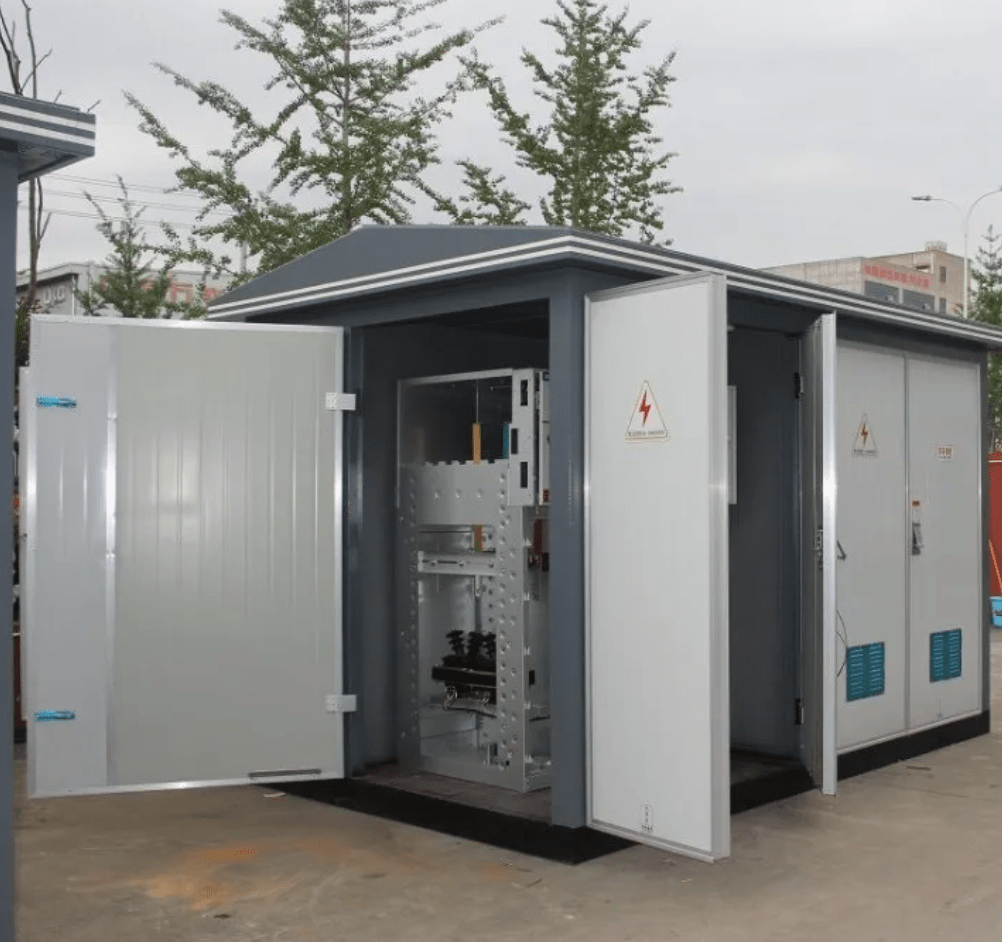
    Transformer substations, which ensure the safe and controlled distribution of electrical energy in the field, consist of medium-voltage switchgear, transformers, low-voltage panels, power cables, and various auxiliary equipment. Special enclosure structures are used to protect all these systems from environmental influences. These structures are generally referred to as transformer kiosks in the industry.

    Located in residential areas, industrial zones, or energy infrastructure projects, these structures can be designed in the form of concrete kiosks, prefabricated kiosks, or metal kiosks. The interior layout is shaped according to the needs of the transformer substation. Medium-voltage switchgear, transformers, and low-voltage panels are usually placed in separate rooms. This separation is important for both safety and ease of maintenance. The contents of these structures can be expanded or simplified according to the usage scenario.

    Concrete Pavilion Usage and Structural Characteristics

    Concrete substations are among the most preferred enclosure structures for medium and low voltage systems. These substations, with their reinforced concrete exterior, are often produced as monoblock, meaning they are made of a single piece. Because the foundation and side walls are poured together, they offer advantages in terms of both structural integrity and watertightness. The substation’s floor has passages suitable for underground cable connections. This allows medium and low voltage cables to be brought directly into the substation from underneath.

    The ceiling area can be designed to relieve sudden gas pressure, especially in the event of internal arc faults. The concrete exterior surfaces are reinforced with external cladding to provide resistance to weather conditions. The roof structure is also designed to prevent rain or snow leakage. Doors are generally made of galvanized sheet metal and are mounted to offer a wide opening.

    Concrete substations produced in Turkey must be manufactured in accordance with the TEDAŞ MYD/2000-036.C technical specification. This standard; It covers many critical topics such as safety, structural integrity, ventilation, insulation, and interior design.

    Concrete Pavilion Dimensions and Usage Limits

    The dimensions of concrete substations depend on the transformer’s power and the characteristics of the installation area. This type of substation is mostly preferred in systems of 400 kVA and above. However, due to production limitations, concrete substations can generally only be manufactured up to a maximum of 7.2 meters. If a transformer building larger than this is required, prefabricated or metal substation solutions can be considered as alternatives.

    Prefabricated Transformer Substations

    Prefabricated substations are preferred in large projects due to their ease of assembly and flexible size options. Similar to concrete substations, they contain separate sections for MV and LV panels, as well as the transformer. However, these structures are delivered to the site in disassembled form and assembled on-site. Their exteriors can be painted in various colors and secured with mechanically lockable sections.

    The standard applicable to prefabricated structures used in TEDAŞ (Turkish Electricity Distribution Company) projects is the TEDAŞ MLZ/2006-52.A specification. This document defines the technical, structural, and safety criteria for prefabricated transformer substations. With an IP23 protection class, these structures offer adequate protection against external environmental conditions.

    Metal Pavilion Usage Areas and Features

    Metal substation enclosures stand out from other solutions in terms of portability and lightness. Their bodies are made of hot-dip galvanized sheet metal, and their inner and outer surfaces are generally coated with electrostatic powder paint. In medium voltage (MV) projects, the RAL 7032 color code is commonly used, but custom color options are also available. The roof is designed with insulation to reduce heat transfer.

    Metal substation enclosures can be used for transformers ranging from low-power transformers like 50 kVA to those up to 4000 kVA. They can integrate not only transformers but also additional equipment such as MV switchboards, LV switchboards, battery-rectifier groups, or generators. They can be shipped fully assembled on site or empty.

    Lighter than concrete substations, these structures can be easily transported to distant locations by road. Especially in international projects, mobile transformer substation solutions, transportable on trailers or semi-trailers, are created using metal substation kiosks. Although TEDAŞ (Turkish Electricity Distribution Company) does not have specific technical specifications for metal substations, these products are generally shaped according to project-specific technical requirements.

    When planning a transformer substation, the type of kiosk to be used should be determined according to the system’s power, installation area, and environmental conditions. Options such as concrete kiosks, prefabricated kiosks, and metal kiosks each offer advantages for different needs. In choosing the right transformer substation, attention should be paid not only to power capacity but also to technical details such as the dimensions of the kiosk, the placement of internal equipment, the ventilation system, and maintenance access. A properly designed and project-specific transformer building ensures both safe energy distribution and contributes to the longevity of the system.