

Rising energy costs and climate change mitigation goals are driving both individual and corporate investors towards renewable energy sources. At the heart of this transformation are solar energy systems. Turkey, due to its geographical location, possesses high solar potential, and various government support mechanisms will be in place in 2025 to harness this potential. The differentiated solar energy incentive programs for businesses, farmers, and homeowners aim to accelerate the transition to clean energy by reducing investment costs.
Solar Energy Incentives Valid in 2025
Solar energy incentives in 2025 will vary depending on the investor’s profile (SME, farmer, homeowner) and the scale of the investment (rooftop, ground-mounted, energy efficiency).
KOSGEB Support for SMEs and Industrialists
The Small and Medium-Sized Enterprises Development and Support Administration (KOSGEB) provides financing opportunities for SMEs’ energy efficiency and renewable energy investments through its “Green Industry Support Program.” Under this program, businesses receive up to 14 million TL in repayable support for installing state-supported solar panel systems on their roofs or integrated into their buildings.
The support rate is 60%; this rate may increase depending on the region where the investment is made. The repayment process is structured in installments, usually following a 12-month grace period after the investment is completed.
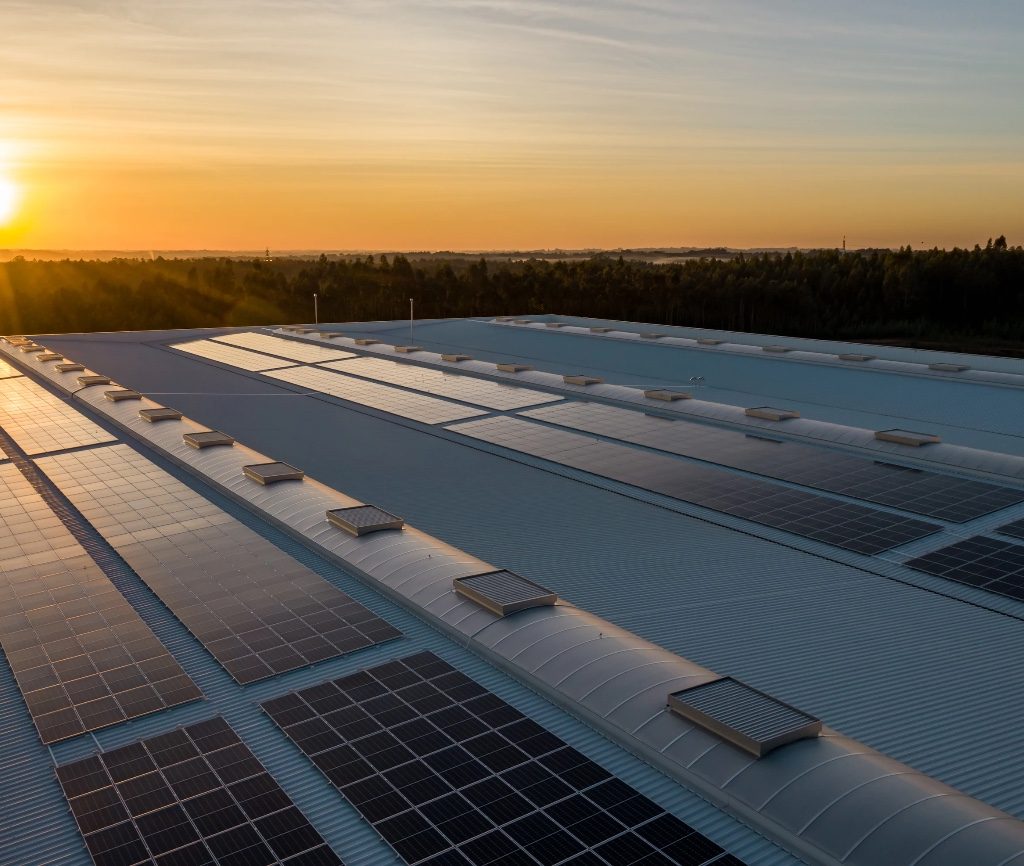
Large-Scale Industrial Facilities (LSIP)
The Ministry of Energy and Natural Resources supports energy efficiency investments in industrial facilities through “Efficiency-Enhancing Projects” (VAP). For 2025, the upper limit for these supports exceeds 21 million TL per project. Solar energy installations can also benefit from these supports as part of energy efficiency projects.
Domestic Production Requirement
Many incentive mechanisms in 2025 require the use of domestically produced solar cells and panels in the installed systems. In particular, investments that do not receive completion approval by a specific date (e.g., February 28, 2025) and do not use domestically produced components may be excluded from some incentive programs. This is something investors should pay attention to when selecting materials.
How to Apply for a Solar Panel Grant?
A grant means non-reimbursable support, and the leading institution in this field in 2025 is the Agricultural and Rural Development Support Institution (TKDK).
TKDK distributes renewable energy grants to agricultural enterprises and rural tourism facilities in rural areas through the IPARD program, financed by the European Union. The IPARD III program, active in 2025, focuses on these investments.
The application process steps are as follows:
TKDK issues a “Call for Project Applications” at specific times of the year. Investors need to follow these dates.
It is mandatory that the applicant (usually an enterprise registered in the Farmer Registration System) and the location of the project (rural area) meet the IPARD criteria.
A detailed technical project and financial feasibility report must be prepared for the solar power plant to be established. At this stage, if a connection to the grid is to be made, a “Call for Connection Agreement Letter” must be obtained from the relevant electricity distribution company.
The project file is first uploaded to TKDK’s online system, and then physically submitted to the provincial coordination office by the specified deadline.
Projects are reviewed according to technical and financial adequacy and scoring criteria. Projects that receive sufficient points are approved and a grant agreement is signed.
The investor completes the project using their own resources or by using a solar panel loan. After documenting the expenses, they submit a payment request to TKDK. The grant amount is transferred to the investor’s account after the review process.
Solar Energy Support for Agriculture and Housing
Support mechanisms differ significantly in the agricultural and residential segments. The approach and support for agriculture are different.
Solar Energy in Agriculture (Agricultural Irrigation and Operation)
The strongest support for the agricultural sector, as mentioned above, is the renewable energy grant program through TKDK (Agricultural and Rural Development Support Institution). Under IPARD (Initiative for Pre-Accession Assistance in Agriculture), grants ranging from 60% to 75% are provided for solar power plant projects that agricultural enterprises will establish to meet their own energy needs (self-consumption). This support can cover investments up to €500,000.
In addition, public banks such as Ziraat Bank are also developing special, low-interest solar panel loan packages for the use of solar energy in agricultural irrigation.
Support for Residential Buildings (Rooftop Solar Power Plants)
Direct grant programs (such as those from TKDK) are not widespread for individual residential buildings. Support in the residential segment is more focused on financing. Individual investors can benefit from “Energy Loan” or “Rooftop Solar Power Plant Loan” packages offered by banks for state-supported solar panel installation.
Banks such as Ziraat Bankası, Halkbank, and İş Bankası offer special loan programs for homeowners. These loans generally include more favorable interest rates than market conditions and repayment plans with long terms of up to 120 months. This financing reduces the initial cost of the investment and shortens the payback period of the system.

Government-backed loan and interest-free financing opportunities.
Financing needs are the biggest obstacle to solar power plant investments. In 2025, two main channels exist to overcome this obstacle:
KOSGEB Repayable Support (Interest-Free or Low-Interest)
For SMEs, KOSGEB’s “Green Industry Support Program” is the most attractive financing option. This program is not a grant, but a repayable support. However, its terms are much better than market loans. Businesses can use this support for state-supported solar panel investments up to 14 million TL. The biggest benefit is the 12-month grace period that begins after the investment is completed, and interest-free or very low-interest repayment installments.
Bank Solar Power Plant Loan Packages
For residential properties and larger commercial businesses outside the scope of KOSGEB, banks are the main financing option. In 2025, many private and public banks have established dedicated loan departments for renewable energy investments.
Ziraat Bank offers financing up to 80% of the investment cost and long-term terms with its “Rooftop Solar Power Plant Investment Loan”.
Halkbank offers “Energy Support Loans” to provide credit for energy efficiency investments to both property owners and tenants.
İş Bankası finances solar power plant investments for SMEs with packages such as “İş’te Güneş Kredisi” (Business Solar Loan).
These loans offer more advantageous interest rates compared to standard consumer or commercial loans and are labeled as direct solar panel loans.