
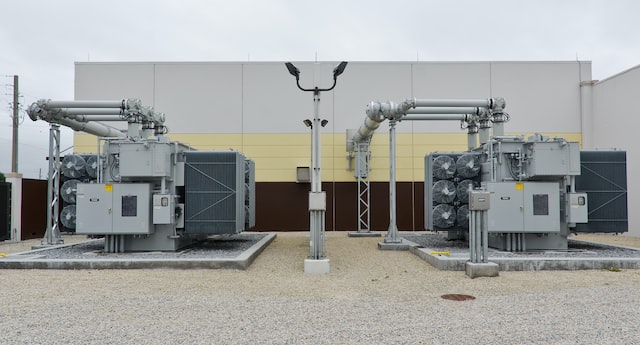
Parallel Connection of Transformers (Parallel Operation of Transformer)
Parallel connection of transformer, also known as parallel operation of transformer, is a common and effective method used in power distribution systems when additional capacity is required or higher reliability is needed. Instead of replacing an existing transformer with a larger unit, connecting another transformer in parallel often provides a more flexible, economical, and reliable solution.
Transformers can operate individually or in parallel with other units. However, they cannot be connected in parallel under all conditions. Specific technical requirements must be strictly met to ensure safe, efficient, and stable operation. Failure to meet these conditions can result in circulating currents, overheating, reduced efficiency, or even serious equipment damage.
When is Parallel Operation of Transformer Required?
Parallel operation becomes necessary in several situations:
- When the existing transformer capacity is insufficient for increased load demand
- When higher system reliability and redundancy are required (especially in hospitals, data centers, and industrial plants)
- When maintenance flexibility is needed without interrupting power supply
- When load growth is gradual and investing in a single very large transformer is not economical
In such cases, connecting transformers in parallel allows the total load to be shared between multiple units, improving both efficiency and operational security.
Conditions for Parallel Connection of Transformer
For safe and successful parallel operation of transformer, the following technical conditions must be satisfied:
- Power Ratings The power ratings of the transformers should be equal or within a maximum ratio of 1:3. Large differences in capacity can cause unequal load sharing.
- Primary and Secondary Voltages The rated primary and secondary voltages of all transformers must be identical.
- Short-Circuit Voltage (%Uk or %Z) The short-circuit voltage (impedance voltage) values must be the same. Even small differences can lead to unequal current distribution.
- Operating Frequency All transformers must operate at the same frequency (50 Hz or 60 Hz).
- Short-Circuit Impedance The difference in short-circuit impedances between parallel transformers should not exceed 10%. Greater differences cause significant circulating currents.
- Vector Group and Phase Angle The vector groups (such as Dyn11, Yyn0, etc.) and the phase angle displacement between primary and secondary windings must be exactly the same.
- Polarity The polarities of all transformers must match. Incorrect polarity can cause short circuits.
- Transformation Ratio The turns ratio (voltage transformation ratio) of all transformers must be identical.
If even one of these conditions is not met, circulating currents will flow between the transformers. These currents do not contribute to the load but cause additional heating and losses, potentially leading to overheating and insulation damage.
Advantages of Parallel Operation of Transformer
Parallel connection of transformer offers several important benefits:
- Higher overall system reliability and redundancy
- Improved energy continuity — if one transformer fails or is taken offline for maintenance, the others continue to supply power
- Better load sharing and higher efficiency at partial loads
- Greater flexibility during maintenance and system expansion
- More economical solution compared to replacing a transformer with a much larger single unit
- Reduced risk of complete power outage in critical facilities
Disadvantages and Risks of Parallel Operation
Despite its advantages, parallel operation also has some drawbacks:
- Possibility of very high short-circuit currents in the system
- Increased complexity in protection coordination and relay settings
- Higher number of auxiliary equipment, cables, and spare parts required
- Greater potential for operational errors during switching and maintenance
- Risk of circulating currents if conditions are not perfectly matched
Therefore, parallel operation requires careful engineering analysis, proper protection design, and expert commissioning.
Technical Considerations for Safe Parallel Operation
When designing a system with parallel operation of transformer, engineers must pay special attention to:
- Accurate calculation of load sharing between transformers
- Proper selection and coordination of protection relays
- Correct sizing of cables and busbars on both primary and secondary sides
- Use of appropriate vector group and impedance matching
- Regular maintenance and periodic testing of all parallel units
Modern protection systems with differential relays and advanced communication can significantly improve the safety and reliability of parallel transformer installations.
Parallel connection of transformer is a widely used and effective solution in power distribution systems when additional capacity or higher reliability is required. However, successful parallel operation of transformer depends on strictly meeting several critical technical conditions, especially regarding voltage, impedance, vector group, and polarity.
When applied correctly with proper engineering and protection, parallel operation provides excellent benefits in terms of reliability, flexibility, and cost-effectiveness. On the other hand, incorrect paralleling can lead to serious operational problems and equipment damage.
For any project involving parallel transformers, detailed technical analysis and compliance with all paralleling conditions are essential for safe and long-term operation.
Looking for Transformer for your project?
Looking for expert advice and high-quality solutions for parallel connection of transformer or parallel operation of transformer systems? We provide technical support for proper transformer selection, paralleling calculations, and reliable installations.
For quotations and requests: info@electricistanbul.com
Whatsapp: +90 501 076 69 91