

What is Medium Voltage?
Medium voltage generally refers to electrical voltage levels between 1 kV (1000 Volts) and 36 kV, and is used in the distribution phase before and after energy transmission. Electrical energy from power plants is produced at medium voltage, transmitted at high voltage through power transmission lines, and ensures the safe and efficient distribution of energy to residential areas, industrial facilities, and infrastructure projects at medium voltage. Unlike low voltage, medium voltage systems allow for energy transmission over longer distances with low losses; they are installed with equipment such as transformer substations, MV cables, circuit breakers, and switchgear. Additionally, in some countries, due to voltage fluctuations in medium voltage distribution systems, medium voltage materials are manufactured and used up to an insulation level of 40 kV.
What are Medium Voltage Switchgear?
Medium-voltage switchgear, which plays a critical role in the transmission and distribution of electrical energy, is used in systems ranging from 1 kV to 36 kV. These systems are firmly established in power transmission lines, industrial facilities, substations, and infrastructure projects. Medium-voltage cables, medium-voltage transformers, medium-voltage circuit breakers, medium-voltage transformers, XLPE cables, and various control and protection equipment are the cornerstones of these systems.
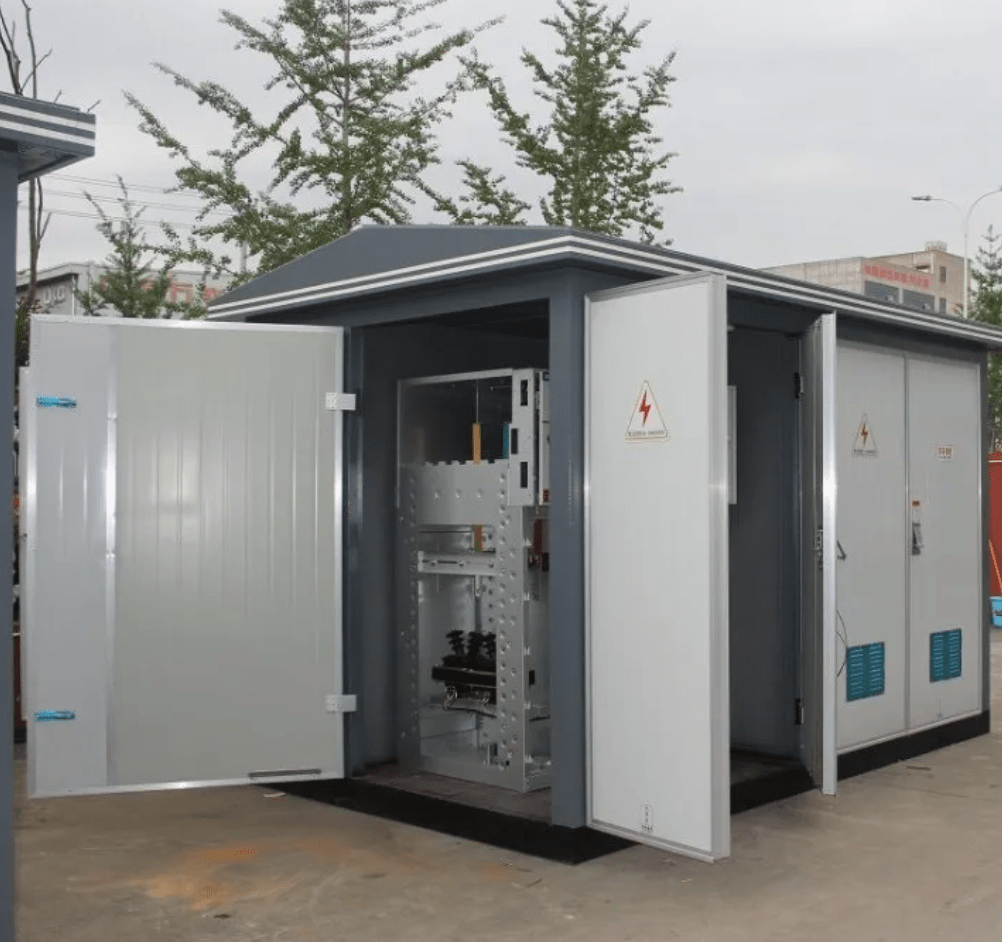
Medium Voltage (MV) Transformer Types (Oil-filled and Dry Type)
MV transformer types are divided into two main groups:
Oil-filled hermetic transformers: Generally used in outdoor environments and concrete substation systems. Cooling and insulation are provided by oil.
Dry-filled MV transformers: Suitable for indoor use. The risk of fire is low as there is no risk of explosion. They have a resin-coated winding structure.
MV Circuit Breaker (36kV and below)
Medium voltage circuit breakers, with their vacuum or SF6 gas construction, interrupt the line in case of short circuits and overcurrents. System safety is ensured thanks to medium voltage rooms or substations containing circuit breakers. They are mounted inside medium voltage switchgear cells.
MV Disconnector and Grounding Disconnector
In medium-voltage switchgear systems, disconnectors are used to physically isolate the circuit by voltage. The circuit is interrupted when there is no load and comes with a safety interlock. The grounding disconnector grounds the system after the circuit has been isolated.
OG Surge Protector
Surge arresters protect medium-voltage (MV) transformers, switchgear, transformers, and transmission lines against voltage surges caused by lightning and switching impulses. They are frequently preferred in 36 kV systems, both inside MV switchgear and in open areas.
MV Digital Protection Relays
Medium voltage digital protection relays are programmable devices that detect faults (phase-to-ground, phase-to-phase, imbalance, etc.) occurring in the lines and trigger medium voltage circuit breakers. They are compatible with SCADA and automation systems.
OG Cable
In medium voltage (MV) power transmission, XLPE cables are generally used in different cross-sections:
1×50/16 XLPE cable is suitable for compact lines.
1×95/16 XLPE cable has a high load-bearing capacity and offers high thermal resistance.
The price of 1×120 XLPE cable increases with the cross-section.
The price of 1×400 XLPE aluminum cable is more economical than copper due to the conductivity of aluminum.
6.3 kV XLPE cable is used in transition voltage levels between low and medium voltage.
36 kV XLPE cable is preferred in long-distance MV lines.
The price of XLPE cable varies according to conductor type, shielding structure, and voltage level. XLPE cable unit price analyses are decisive in project cost planning. Cables diversified like YAXC7V-R are special ferrule-type cables for MV lines. Medium voltage cable prices are evaluated based on cross-section, length, and type.

MV Cable Heads
Medium voltage cable terminations ensure a secure connection of the medium voltage cable to the panel or transformer. They come in indoor and outdoor types, and are also classified as standard and plug-in types.
MV Current and Voltage Transformer
Medium voltage (MV) current transformers reduce the low current at high voltage to values of 1 Ampere or 5 Amperes, sending signals to meter and relay systems.
36 kV voltage transformers, on the other hand, reduce the high voltage to 100 VAC and are central to measurement and protection systems. MV voltage transformer prices are determined according to their class sensitivity and voltage level.
OG Battery Rectifier Group
In medium voltage (MV) systems, auxiliary voltage is required for relays, communication modules, and circuit breakers. This is provided by a battery rectifier set. 24VDC and 110VDC systems are particularly common.
Busbars and Insulation Materials
Copper or aluminum busbars are used for medium voltage current transformers and connection systems. Voltage cable connections in MV systems must be insulated.
Insulating mats, insulating gloves, and insulating rods, which are included in the medium voltage equipment groups, are mandatory for occupational safety.
Other Materials Used in Medium Voltage Applications
Medium voltage poles vary according to the project and are offered in galvanized or reinforced concrete types. Medium voltage companies offer solutions covering material supply, field installation, and service. Medium voltage drives are frequency converters used for the efficient operation of MV motors. Medium voltage fuses are used only to interrupt the current in cases where there is no circuit breaker in the system. Fuse types differ according to current limit and magnitude.
Medium voltage switchgear is the backbone of the system in both energy infrastructures and industrial facilities. The harmonious operation of dozens of components such as MV XLPE cable, medium voltage transformer prices, MV material prices, voltage transformers, and cable terminations determines the efficiency and safety of the system.
For solutions suitable for your project, products that comply with the technical specifications and have quality certificates should be preferred. In MV systems, the correct material selection ensures long lifespan, low failure rate, and high energy efficiency.


