
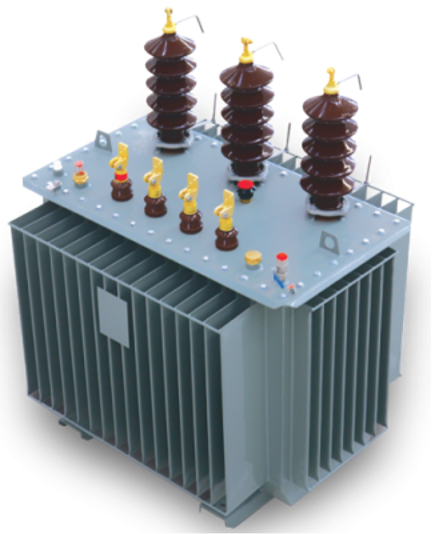
Electrical Transformers
A transformer, also known as an electrical transformer or power transformer, is a static electrical device that transfers electrical energy from one voltage level to another. Transformers play a critical role in the generation, transmission, and distribution of electrical power.
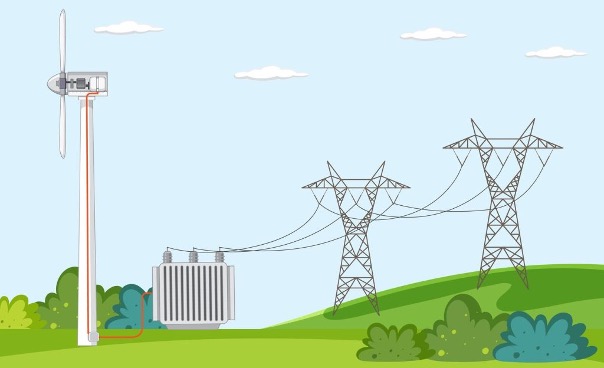
Electricity generated at power plants is transmitted over long distances at high voltage levels to reduce losses. In cities and industrial facilities, this high voltage must be stepped down to safe, usable levels. This is where transformers become essential.
Working Principle of Transformer
The working principle of transformer is based on Faraday’s Law of Electromagnetic Induction.
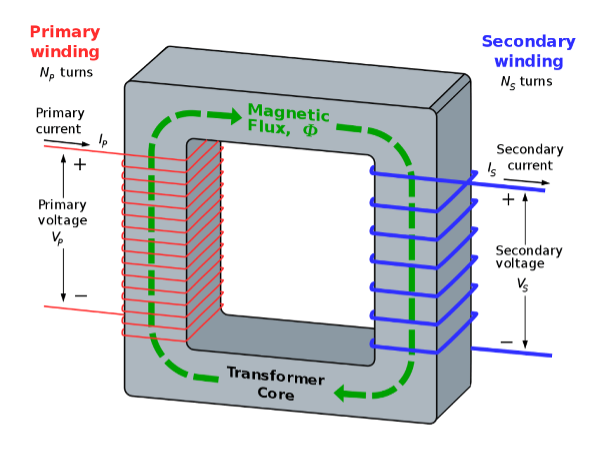
A transformer consists of two main windings: the primary winding (input) and the secondary winding (output), wound around a common magnetic core made of laminated silicon steel sheets.
When alternating voltage is applied to the primary winding, it creates a changing magnetic flux in the core. This flux induces an electromotive force (EMF) in the secondary winding. The voltage transformation depends on the turns ratio between the primary and secondary windings.
- If the secondary has more turns than the primary → voltage increases (step up transformer)
- If the secondary has fewer turns than the primary → voltage decreases (step down transformer)
Power remains approximately constant (P = V × I), while voltage and current change inversely.
Advantages of Transformers
- No moving parts, resulting in very high efficiency (up to 99%)
- Low maintenance requirements
- Excellent voltage regulation and reduced energy losses in power systems
Types of Transformer
Transformers are classified in several ways:
According to Phases:
- Single-phase transformers (monophase)
- Three-phase transformers (threephase) – most common in power systems
According to Cooling and Insulation:
According to Application:
- Power transformers (high power, used in transmission networks)
- Distribution transformers (used in city networks)
- Step up and step down transformers
- Instrument transformers (current and voltage transformers)
- Special purpose transformers
Power transformers are typically used in generation and transmission with ratings from 5 MVA to 1000 MVA. Distribution transformers are used to supply end consumers, usually up to 5 MVA.
Transformer Efficiency and Materials
Modern transformers achieve very high efficiency levels. Windings are made of either copper or aluminum conductors. While copper was traditionally preferred, aluminum winding transformers are now widely used due to cost advantages and improved technology.
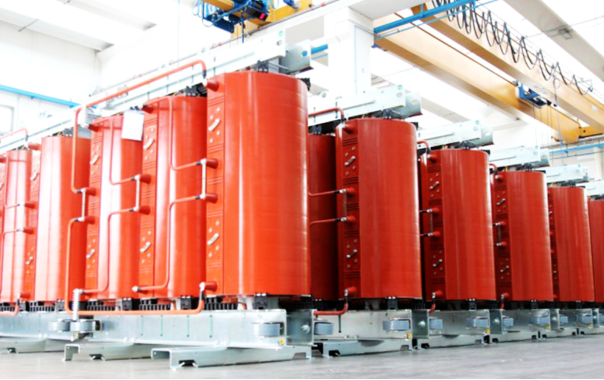
Looking for Electrical Transformer for your project?
Looking for high-quality electrical transformer, power transformer, step down transformer, or complete solutions for types of transformer? We provide expert technical support for all your power distribution and industrial transformer needs.
For quotations and requests: info@electricistanbul.com
Whatsapp: +90 501 076 69 91